
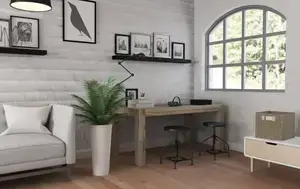
A small room does not have to feel cramped or uncomfortable. The right colors, furniture, lighting, and layout can completely change how spacious a room appears without adding a single square foot.
You also do not need a major renovation to achieve the effect. A few thoughtful interior design choices can make a bedroom, living room, office, or apartment feel brighter, more open, and easier to move around.
1. Choose Light Colors for Walls
Light colors reflect more light and can make walls feel less visually heavy. White, warm beige, soft gray, cream, and pale neutral shades work particularly well in compact spaces. You do not have to make everything white, either. Use slightly darker colors through pillows, artwork, rugs, or smaller furniture pieces to add contrast and personality. Keeping the main walls relatively light creates an airy foundation that makes the entire room feel more spacious.
2. Use Mirrors to Create More Depth
Mirrors offer one of the easiest ways to make a small room appear larger. A large mirror reflects both the room and available light, creating an immediate sense of additional depth. Place one across from a window when possible to distribute natural light throughout the space. Instead of filling a wall with several tiny mirrors, consider one larger piece that creates a stronger visual effect and keeps the design from looking unnecessarily busy.
3. Pick Furniture That Fits the Room
Oversized furniture can quickly overwhelm a compact interior. Choose pieces that provide the function you need without taking up unnecessary floor space. A slim sofa, compact dining table, or narrow console can leave more visible space around the furniture and improve movement through the room. Avoid pushing too many pieces into one area simply because they technically fit. A smaller number of appropriately sized items often makes a room look more intentional and considerably larger.
4. Keep the Floor as Visible as Possible
The more floor you can see, the more open a room tends to feel. Furniture with raised legs creates visible space underneath and gives heavy pieces a lighter appearance. Wall-mounted shelves, floating nightstands, and elevated cabinets can produce a similar effect. You can also remove unnecessary furniture that interrupts natural walking paths. Creating clear areas between major pieces allows your eyes to move through the room without constantly encountering visual obstacles.
5. Take Advantage of Vertical Space
When floor space is limited, look upward. Tall bookcases, floor-to-ceiling curtains, vertical artwork, and high shelving draw attention toward the ceiling and emphasize the room’s height. Hang curtains slightly above the window frame and let them extend toward the floor to make windows appear taller. Vertical storage also provides room for books, decorations, and everyday items without requiring additional cabinets or tables that consume valuable floor space.
6. Improve the Lighting
Dark corners can make even a reasonably sized room feel smaller. Natural light provides the best starting point, so avoid covering windows with heavy furniture or excessively thick curtains during the day. Add several light sources instead of relying entirely on one ceiling fixture. Floor lamps, table lamps, wall lights, and subtle accent lighting can brighten different areas and create greater visual depth. Good lighting also makes colors and interior details look cleaner and more inviting.
7. Reduce Visual Clutter
Too many decorations, patterns, cables, and small objects can make a compact room feel crowded. Give frequently used items a dedicated storage space and leave some surfaces intentionally clear. Closed storage works particularly well for objects that do not need constant display. You can still decorate with artwork, plants, books, and personal items, but choose pieces deliberately. A visually organized room usually feels larger because your eyes have fewer competing elements to process.
Final Thoughts
Making a small room look bigger does not require expensive remodeling. Light colors, correctly sized furniture, mirrors, vertical storage, better lighting, and less clutter can dramatically change how you experience the space. Focus on creating clear sightlines and leaving enough visual space around furniture rather than trying to fit as much as possible into the room.
FAQ
What color makes a small room look bigger?
Light neutrals such as white, cream, beige, and soft gray can help a room feel more open because they reflect light well. However, good lighting and a balanced layout matter just as much as wall color.
Do large mirrors make a room look bigger?
Yes. Large mirrors create an impression of additional depth and reflect light around the room. Placing a mirror near or across from a window can make the effect even stronger.
Should you use small furniture in a small room?
Choose furniture that matches the room’s proportions rather than automatically buying the smallest pieces available. A few appropriately sized items usually work better than many tiny pieces.
Do curtains make a small room look smaller?
Heavy or poorly positioned curtains can reduce visible space and natural light. Hanging curtains higher and choosing lighter fabrics can make windows appear larger and the ceiling feel taller.
Picture Credit: Magnific