
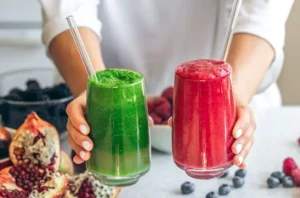
Smoothies work best when they’re simple. At home, you control texture, sugar, and how your body actually feels afterward. The best smoothies aren’t the fanciest ones. They’re the ones that give steady energy, don’t spike blood sugar, and keep you full longer than an hour.
A good smoothie feels like food, not dessert.
The Base Matters More Than The Toppings
Most smoothies fail at the base. Too much juice, too much fruit, not enough balance. That creates sweetness without stability. At home, water, milk, plant milk, or unsweetened yogurt work better than juice. They hydrate without overwhelming the system.
When the base is neutral, everything else can do its job instead of fighting sugar overload.
Fruit Should Support Energy Not Replace A Meal
Fruit brings vitamins and flavor, but it shouldn’t be the whole smoothie. One or two fruits are enough. Banana for texture, berries for antioxidants, apple or mango for freshness. More than that turns the smoothie into liquid sugar.
The goal isn’t maximum sweetness. It’s steady energy.
Protein Is What Makes A Smoothie Stick
Without protein, smoothies digest too fast. Hunger comes back quickly and energy drops. Protein slows digestion and supports muscles, hormones, and focus.
Greek yogurt, cottage cheese, protein powder, nut butter, or seeds all work. You don’t need a huge amount. You just need enough to anchor the drink so it behaves like a meal, not a snack.
Healthy Fats Change How You Feel After
Fat is what turns a smoothie from light to satisfying. A small amount is enough. Nut butter, avocado, flaxseed, or chia add creaminess and help absorb fat-soluble vitamins.
Smoothies without fat often feel good for twenty minutes and then leave you searching for food. Fat smooths the curve.
Greens Work Best When You Don’t Taste Them
Spinach and kale are popular for a reason. They blend easily and don’t overpower flavor when used correctly. A handful is enough. You shouldn’t feel like you’re drinking salad.
Greens add minerals and fiber quietly. When you taste them strongly, it usually means the balance is off.
Texture Decides Whether You’ll Make It Again
A smoothie that’s too thick feels heavy. Too thin feels pointless. Frozen fruit, ice, and liquid ratios decide whether it feels like a treat or a chore.
At home, you can adjust slowly. Add liquid last. Blend longer than you think. Texture matters more than exact ingredients because it determines enjoyment and consistency.
Timing Changes The Best Combination
Morning smoothies work best when they’re grounding. Protein, fat, moderate fruit. This keeps energy stable and avoids crashes. Post-workout smoothies can handle more carbs because the body uses them faster.
Evening smoothies should be lighter and less sweet to avoid sleep disruption. Context matters more than rules.
The Best Home Smoothies Are Repeatable
A great smoothie is one you’ll actually make on a busy day. That means familiar ingredients, minimal prep, and predictable results.
When smoothies get complicated, they disappear from routine. When they’re simple, they become a habit.
Smoothies Are A Tool Not A Miracle
Smoothies won’t fix a bad diet. They won’t replace sleep or movement. But they can support nutrition when done right.
At home, the best smoothies are balanced, boring in the best way, and quietly effective. They don’t impress Instagram. They support your day. And that’s exactly what makes them good.
Picture Credit: Freepik